Suture Optimization Enhances Saphenous Trunk Durability in CHIVA: A Comparative Study
Main Article Content
Keywords
CHIVA, varicose veins, chronic venous disease, suture technique, saphenous trunk recanalization, venous hemodynamics, junctional ligation
Abstract
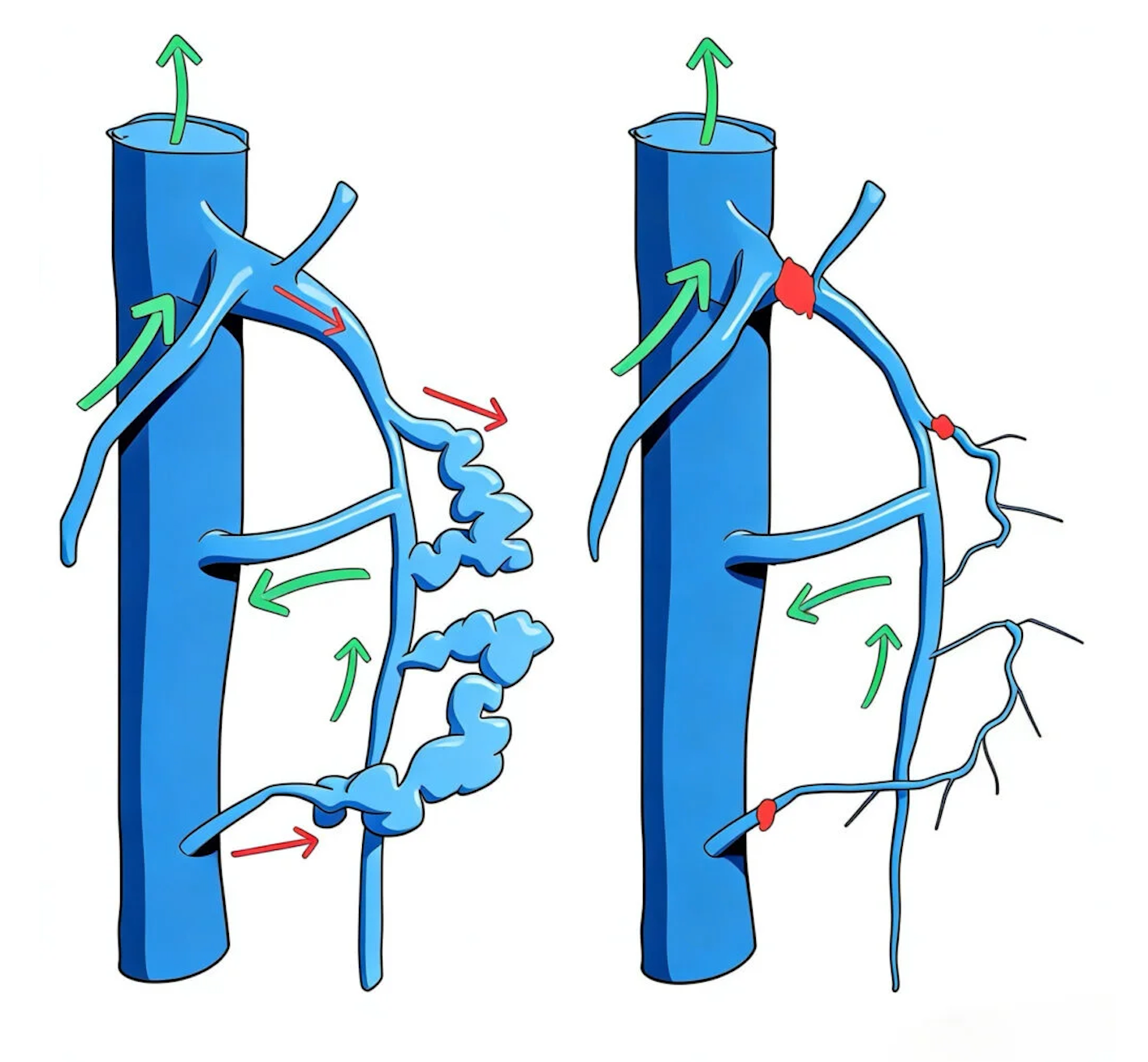
Background: The ambulatory conservative hemodynamic correction of venous insufficiency (CHIVA) method relies on durable high-pressure junctional disconnection to eliminate pathological reflux while preserving the saphenous trunk. However, technical failure at the junction can lead to main trunk recanalization. This study evaluates the impact of optimizing junctional ligation—transitioning from pure silk ligation to a combined silk and non-absorbable Prolene double-transfixion technique—using the rate of true main trunk recanalization as the primary metric of procedural durability.
Methods: We retrospectively analyzed 1,725 primary limb interventions performed within a standardized international clinical group between January 2019 and September 2026. Cohorts were divided into a pre-suture change group (N = 1,148; historical pure silk 5-fold ligation) and a post-suture change group (N = 577; silk 4-fold ligation with Prolene double-transfixion). Re-interventions were categorized into five distinct pathophysiological mechanisms.
Results: Implementation of Prolene double-transfixion reduced true main trunk recanalization from 4.97% (57/1,148) in the pre-change cohort to 0.17% (1/577) in the post-change cohort. True recanalization dropped from being the primary contributor to re-intervention (27.67%, 57/206) to a minimal fraction (2.50%, 1/40). The cumulative re-intervention rate decreased from 17.95% to 6.93%. In the post-change era, poor caliber regression and cosmetic residuals became the leading drivers for secondary intervention (47.50%, 19/40).
Conclusions: Anchor-transfixion with monofilament Prolene virtually eliminates true main trunk recanalization, establishing robust mechanical stability at the saphenofemoral and saphenopopliteal junctions. In modern standardized CHIVA practice, secondary procedures are overwhelmingly driven by aesthetic refinement rather than technical surgical failure.